Why good accounting can prevent problems in your company
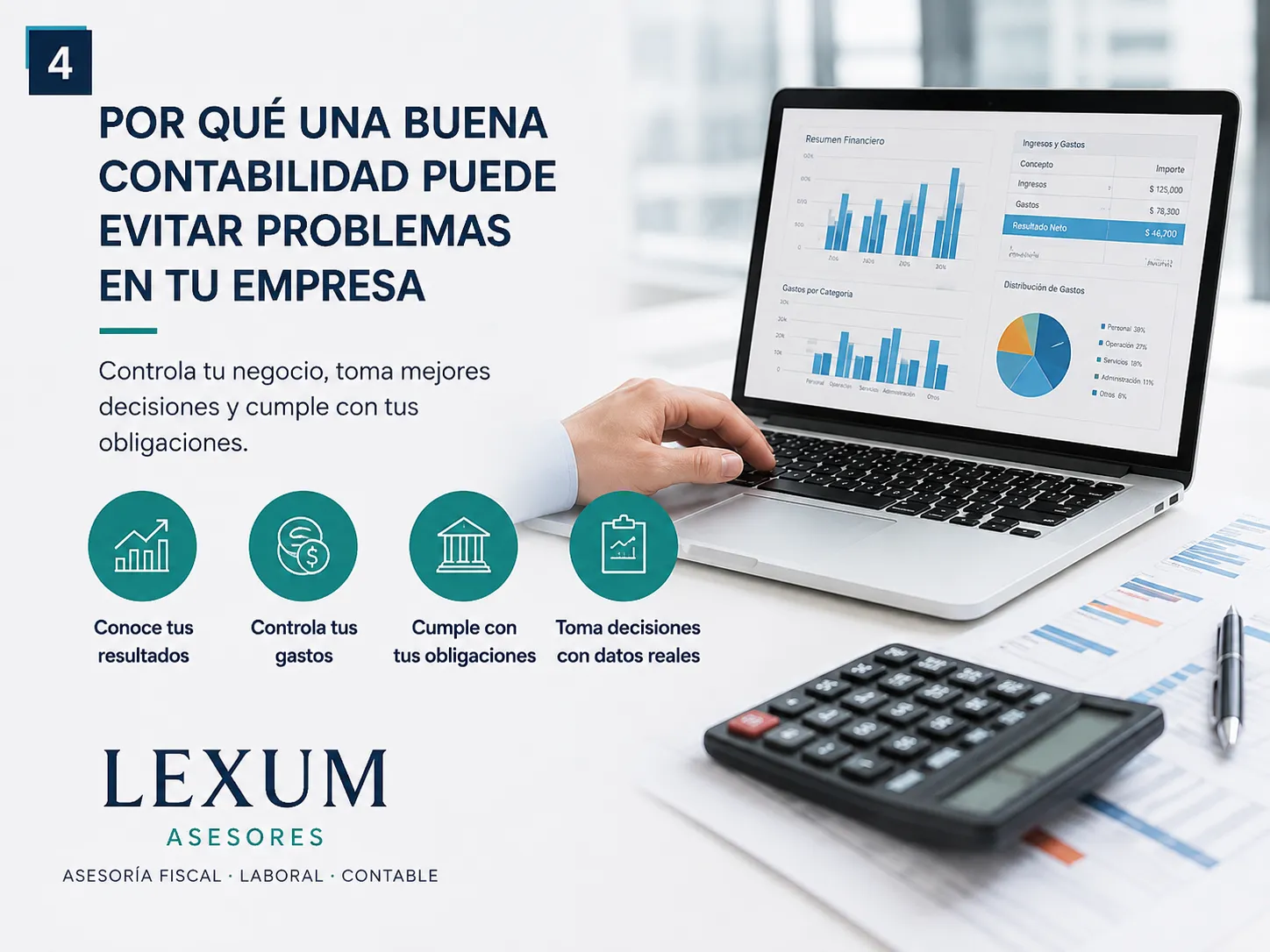
Many businesses see accounting as an obligation whose only purpose is to file taxes. However, well-kept accounts are one of the most important tools for understanding the real state of the business.
Accounting tells you how much the company earns, how much it owes, which clients have not yet paid and whether there is enough cash to cover the coming months.
Selling more doesn't always mean earning more
A company can increase its sales and at the same time run into financial problems.
This can happen when:
- Margins are too low.
- Clients pay late.
- Fixed costs are high.
- Too much stock is bought.
- Loans are used to fund day-to-day expenses.
- No money is set aside for taxes.
The bank account shows how much money is available, but it does not necessarily reflect the real profit.
What information accounting gives you
Up-to-date accounts let you analyse:
- Income and expenses for the period.
- Profit or loss.
- Unpaid invoices.
- Debts to suppliers.
- Loans and financial commitments.
- Taxes due.
- Value of stock and assets.
- Cash flow trends.
This information helps you make decisions on prices, hiring staff, investment, financing and the distribution of profits.
Accounting obligations of companies
Accounting obligations are governed by, among other rules, the Código de Comercio (Spanish Commercial Code), the Plan General de Contabilidad (the Spanish chart of accounts), the Plan General de Contabilidad para Pymes (its version for small and medium-sized businesses) and the Ley de Sociedades de Capital (Spanish Companies Act). The purpose of accounting is to show the company's economic and financial position and the main events during the financial year.
Companies must also prepare, approve and file their annual accounts with the Registro Mercantil (Companies Register). Failure to file is subject to the rules set out in the Ley de Sociedades de Capital.
Common accounting mistakes
Among the most frequent problems we see:
- Invoices issued that are not passed on to the adviser.
- Expenses paid from personal accounts.
- Undocumented loans from partners.
- Payments received without an invoice.
- Bank balances that don't match the accounts.
- Purchases of fixed assets recorded as day-to-day expenses.
- Personal expenses paid by the company.
- No control over clients with outstanding payments.
Correcting these mistakes at the end of the year is usually harder than reviewing the accounts every month.
Accounting to run your business, not just to file returns
A good adviser should not just enter invoices and file taxes. They should also help the business owner understand their figures and spot possible risks.
At Lexum Asesores we offer accounting, tax and business management services for small businesses and companies.
Contact our accounting advisers in Torrevieja and find out the real position of your company before you make your next important decision.