
Quarterly taxes for autónomos: which forms you need to file
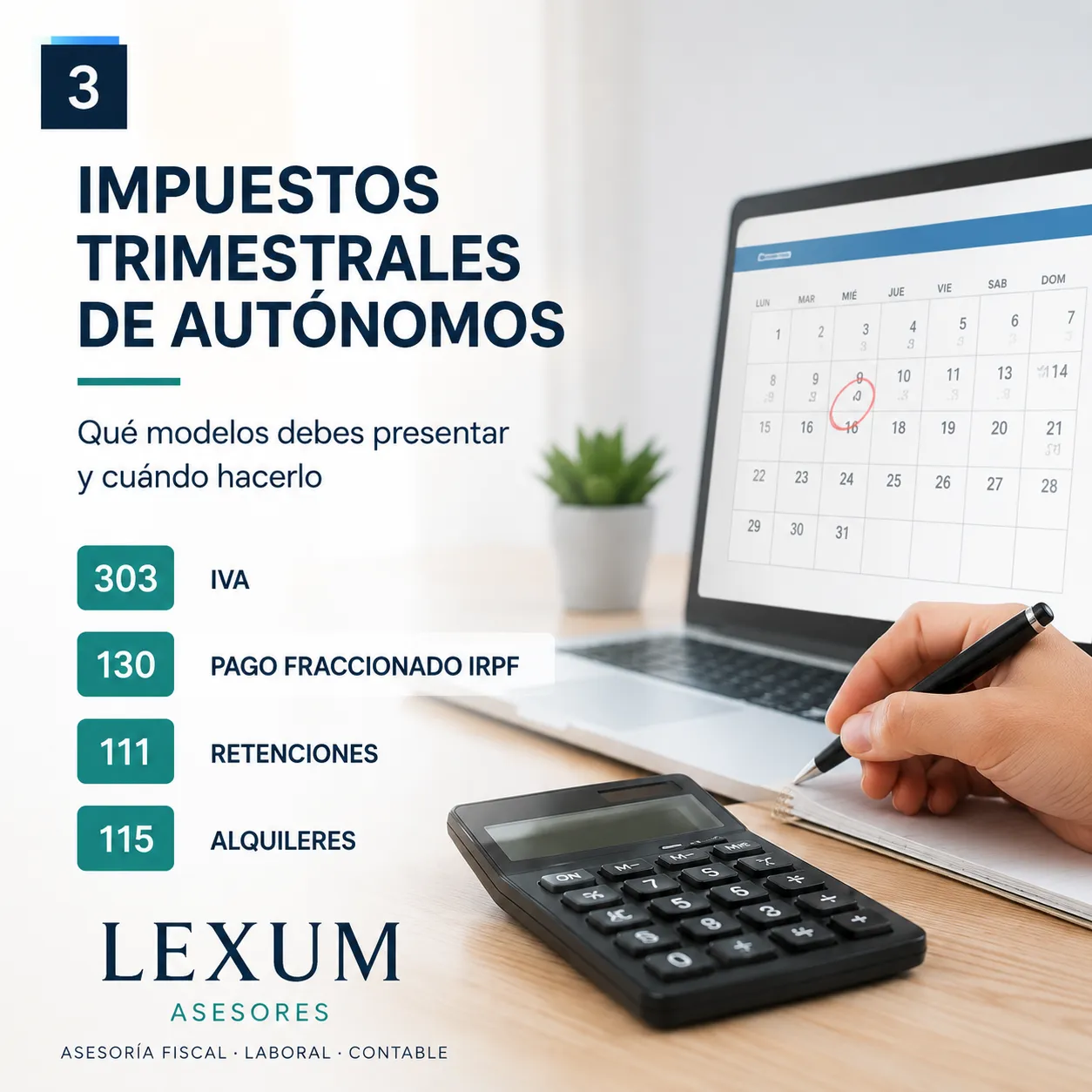
One of the main concerns when starting an activity is knowing which taxes have to be filed. The answer depends on the activity, the tax regime, the expenses, the employees hired and the type of transactions carried out.
Not all autónomos (self-employed workers registered with Spanish social security) file the same forms. That is why, before starting, it is essential to complete the tax registration correctly and check all the obligations assigned to you.
Modelo 303: IVA return
Modelo 303 is used to declare the IVA (Spanish VAT) charged on the invoices you issue and the deductible IVA on the purchases and expenses of your activity.
Put simply:
IVA payable = IVA charged – deductible IVA
However, not all the IVA you pay is automatically deductible. There must be a valid invoice and the expense must be related to the activity.
During 2026 the Agencia Tributaria (the Spanish tax agency) offers the Pre303 service for preparing and filing this return electronically.
Modelo 130: IRPF instalment payment
Modelo 130 is a payment on account of IRPF (Spanish income tax) filed by many autónomos under the estimación directa (direct assessment) system.
It is calculated on the income and expenses accumulated since the beginning of the year. That is why it is important for the accounts to be up to date and for all invoices to be correctly recorded.
Some professionals whose invoices carry withholding may not be required to file this form if they meet the legal conditions.
Modelo 111: withholdings for employees and professionals
Modelo 111 is filed when the autónomo or the company has withheld tax, for example:
- On their employees' payslips.
- On invoices received from certain professionals.
- On other income subject to withholding.
The amounts withheld do not belong to the payer: they must then be paid to Hacienda within the relevant deadline.
Modelo 115: rent withholding
When you rent premises, an office or an industrial unit and the invoice includes withholding, you will normally need to file modelo 115.
Afterwards, there may also be an obligation to file the corresponding annual summary.
When are quarterly taxes filed?
As a general rule, many quarterly returns are filed during the first twenty days of April, July and October. Those for the last quarter are usually filed in January, although the exact deadline depends on the form and on whether the payment is made by direct debit. The official 2026 calendar, for example, sets quarterly filing of modelos 111, 115 and 303 between 1 and 20 April, July and October, with earlier deadlines for direct debit.
Filing late can have consequences
When a return is filed late, surcharges, interest or penalties may arise. Problems can also come up when invoices are not in order, documents are missing or personal expenses are mixed up with business expenses.
It is not a good idea to prepare all your accounts on the last day. It is best to hand in your invoices regularly and check the estimated result in advance.
We handle your taxes
At Lexum Asesores we keep track of the tax obligations of the self-employed and companies, review the documents and file returns on time.
Contact our tax advisers in Torrevieja and leave your taxes in professional hands while you focus on growing your business.